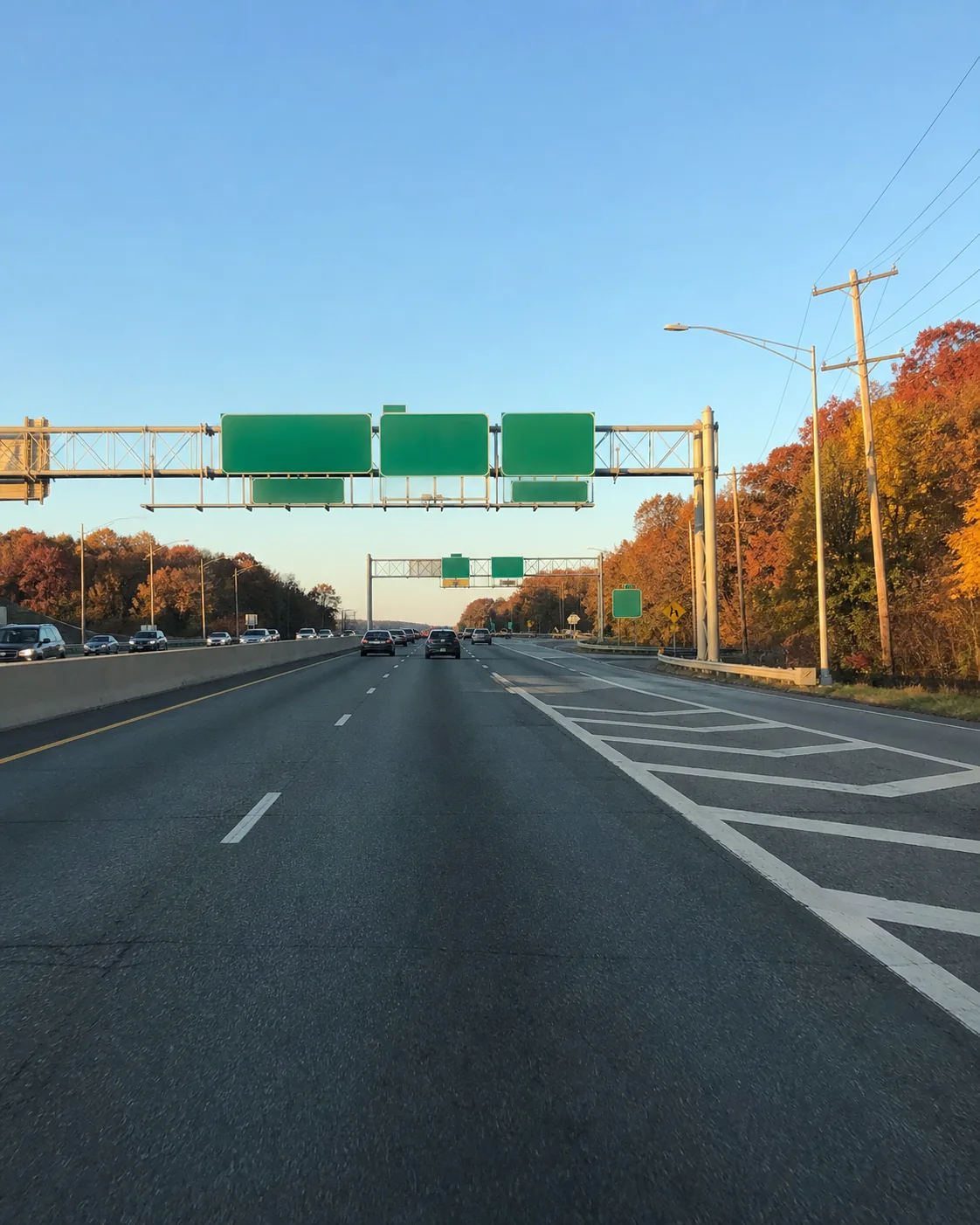
Do not collapse Route 3, Route 21 and Route 46 into one merge
Name the road occupied at first contact, then describe whether the truck was already alongside or was arriving from an approach. These prompts do not assert a current ramp layout.
| Place you occupied | Movement to distinguish | Observation that helps |
|---|---|---|
| Main roadway | Truck already alongside versus joining traffic | Which part was beside your car before it crossed toward you? |
| Connecting ramp | Impact on the ramp versus impact after joining the next road | Was the car still following the ramp when the first contact occurred? |
| Local Clifton street | Truck turning from a street versus leaving a property | Where did the truck begin moving, and did the cab clear before the trailer contacted you? |
For a Clifton police record, its official FAQ provides the accident-report route and Records contact, (973) 470-5877. Confirm availability before traveling; use another agency's instructions if it investigated.
This section uses the linked official resources checked on October 13, 2026. It is an editorial comparison, not original crash data or a finding about your case.
What should you do if the scene is still unsafe?
Call 911 for an emergency and follow responders' instructions. Do not stand near a truck or in an active lane to obtain a photograph. If you cannot safely collect details, explain that later. Medical care and safety come first.
If you have already left, find your discharge instructions and any incident reference you were given. Ask which medical follow-up is appropriate. Do not select a provider simply because a claims caller says it will make the file easier to handle.
Have someone you trust help with a practical problem if needed: locating the tow yard, collecting belongings from the vehicle or retaining information already on your phone. That can reduce the number of tasks you have to manage while recovering.
What if the crash happened near a ramp or interchange?
Tell the investigator whether you were on the main roadway, approaching a ramp, entering traffic or already on a local street. “Near Route 46” can describe several different movements. If you cannot name a ramp or intersection, provide the location information you actually have.
Record the travel direction if you know it. Explain whether contact involved the truck's cab, side or trailer, and whether another impact followed. Those details can help frame the investigation without requiring you to estimate distances precisely.
A highway sign visible in a photograph is context. It does not prove the point of impact. Likewise, a nearby business address can help locate a scene without establishing that its entrance or delivery operation caused the accident.
For official road context, use the NJDOT Passaic County highway map. Maps do not establish a driver's conduct or current traffic conditions.
What if a box truck hit you on a local Clifton street?
Identify the operation as accurately as you can. A delivery vehicle may belong to the business named on it, be rented or be operated under another arrangement. Give the lawyer or investigator the markings and registration details you have rather than making that ownership decision yourself.
If contact occurred while the truck was turning or leaving a driveway, describe the movement. For a pedestrian, explain the crossing location and what was visible. For another driver, explain your lane and whether you were stopped or moving.
Nearby witnesses or recordings may help. A business having a camera does not mean it recorded the collision or keeps footage indefinitely. Let the person investigating know why you think a recording could exist and ask whether preservation should be requested.
How do you find the crash report?
Use the investigating agency and incident reference. Do not assume that every crash in Clifton is processed through one online system. If you are unsure, start with the agency named on the scene paperwork and ask for its report request process.
Check the report's basic information when it arrives. A mistake about a plate or contact detail should be raised through the agency's process. A disagreement about a driver's account needs to be explained to the person assessing the case; it may require further evidence rather than an administrative correction.
Retain the original report separately from your own notes. You can highlight questions in a copy, but you should not change what appears to be the official record.
Why is the trucking insurer asking questions so quickly?
A repair payment and an injury release can address different losses. Use the settlement questions guide to identify what a proposed agreement covers. Get individual advice about terms you do not understand; no local maneuver establishes a settlement amount.
What evidence can disappear after a commercial collision?
Tell the person investigating if the truck or your car is being repaired, moved or disposed of. Ask which vehicle inspection, recording or business-held trip record is relevant and whether a preservation request is appropriate. Do not assume that every commercial vehicle has an electronic logging device, camera or usable event data. Discuss inspection needs alongside storage costs rather than leaving a vehicle indefinitely without a plan. Use statewide truck guide for the wider truck investigation.
How do you manage work and medical bills during the claim?
Tell the clinician the work you perform and ask for guidance about restrictions. Keep the employer's response if modified duties or a return date are discussed. If pain or limitations change, bring that information back to the provider rather than making the insurer your source of medical advice.
For the time and duties actually affected, use the missed-work guide. Keep your actual hours, earnings and restrictions separate from a predicted recovery period. The local vehicle movement described here does not determine whether a particular loss is payable.
What questions should you ask a Clifton truck accident lawyer?
Ask about experience with the type of commercial vehicle involved, the investigation needed and who will communicate with the insurers. Ask how fees and expenses work and which deadlines need attention now.
Mention any public entity, work-related activity or out-of-state insurance early. Each can introduce questions that should not be hidden behind the general label “truck accident.” You can start the discussion before every document is available.
Advertisement: Start the New Jersey accident quiz. It opens in English. Injuries Cases Autos is not a law firm and does not guarantee representation, compensation or a result.