
Write your account from your seat
Being a passenger means you may have seen something different from the driver. Begin with where you were seated and what was visible from there. Did you see the other vehicle, hear a sound or notice movement after contact? A seat location can explain why your account includes some details and not others. You do not need to adopt the driver's complete story.
Record your own recollection before combining it with everyone else's messages. If you were looking away immediately before the collision, say that. If you remember only a later stage, preserve that stage accurately. An account with clear limits is more useful than one that sounds certain because a group has agreed on the wording. Do not add an observation you did not make simply to avoid disagreeing with someone you traveled with.
Identify the trip without publishing it
A trip description should explain whose vehicle you occupied and how the journey was arranged. If you have booking information for an app-booked or other arranged ride, preserve the record privately. It may help identify the trip, but it does not by itself decide which insurance applies or establish responsibility for the accident.
Use actual documents rather than selecting a transport category from memory if the arrangement is uncertain. A personal lift, borrowed vehicle and booked ride may generate different questions. The practical step is to identify the circumstances, not to announce their legal effect. Keep booking references, personal addresses and account information away from public posts. When a professional requests a record, confirm why it is needed and send the relevant item through a verified channel.
Separate your observations from the conversations afterward
A passenger may hear an exchange at the scene that the driver did not hear. Preserve who spoke, the words you recall and whether they were exact words or your summary. Do not convert an apology into an admission of every legal issue. The important task is to preserve the statement with context.
If another passenger tells you something later, keep that attribution. 'My friend said the vehicle came from the side' is different from 'I saw the vehicle come from the side.' A group chat can contain useful dates or messages, but it is not a substitute for independent recollection. Avoid editing a group summary until everyone appears to have remembered the same thing. Differences in viewpoint can explain differences in accounts without proving that one person is dishonest.

Keep your treatment paperwork in your own file
A driver's repair documents do not replace your health records. If you have medical concerns, seek appropriate care and explain your own experience to the clinician. Describe symptoms in your own words and do not borrow another passenger's description. Health decisions should not wait for an article to decide whether the vehicle damage looks serious enough.
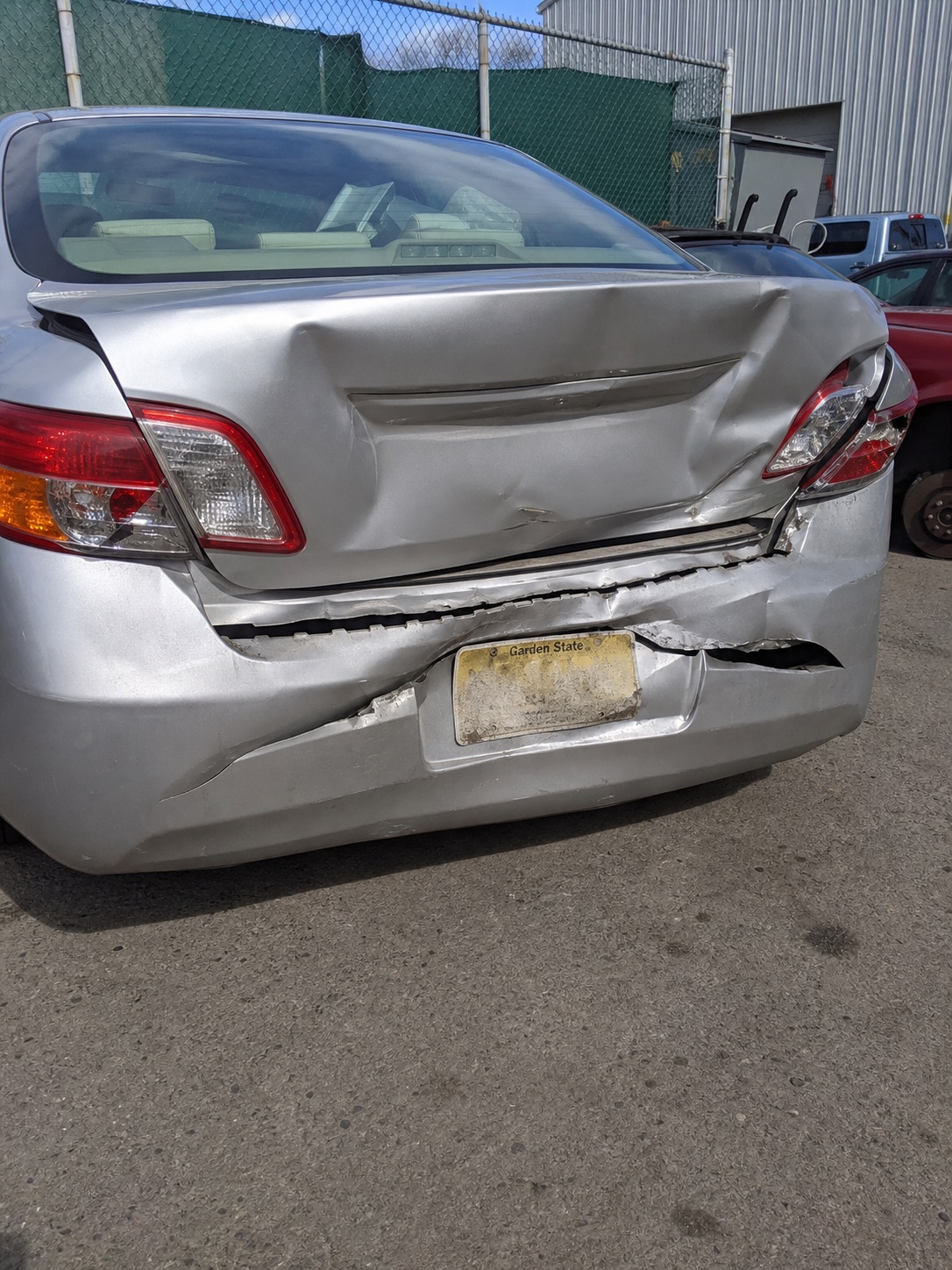
Keep your appointment information, instructions and bills securely. You can share a relevant item with an appropriate recipient without giving the entire travel group access to your medical history. If someone offers to collect everyone's records, ask who will receive them and why. The generated images here illustrate damage and paperwork only. They do not establish a diagnosis, show a real passenger injury or indicate the severity of anyone's accident.
Ask which coverage is actually being considered
The NJ Motor Vehicle Commission describes PIP as medical-expense coverage for people covered under an automobile policy after an accident. That overview does not determine whether a particular passenger is covered by a particular policy. Your role and the available policy documents are a starting point for a specific question.
Ask the insurer or qualified professional which policy it is reviewing, which coverage it means and what additional documents are needed. Do not assume that one passenger's answer automatically applies to everyone in the vehicle. An insurance card identifies useful information but may not contain the full terms. Keep the actual written response with the relevant claim identifier. If the answer changes, preserve both explanations and ask what circumstances or documents account for the change.
Track requests made to you separately
You may receive a request for a statement or a document while the driver receives requests about the vehicle. Keep your own list with the sender, purpose, requested item and response. This prevents a message about another person's file from being treated as an instruction about yours.
Before sharing sensitive information, verify the recipient and ask which claim the request concerns. If a question asks you to guess a speed, fault or another person's symptoms, explain the limits of your knowledge. Keep copies of what you submit and any receipt confirmation. 'Sent' and 'received' are different stages; neither means a coverage question has been approved. A concise request log can help you ask why an item is needed again without relying on someone else's recollection of the call.
Prepare your own consultation questions
For a first consultation, bring your seat location, the trip information, your account and the correspondence you received. Ask what the professional needs to understand your circumstances. You do not need a complete file or a confident theory about the collision before describing the situation.
Questions may include who would handle the matter, what an agreement would cover, how costs would be explained and how you would receive updates. If someone else in the vehicle is also seeking representation, do not assume that their arrangement establishes yours. Ask how your inquiry would be handled. A professional should explain the proposed relationship and next steps. An article can help organize the questions but cannot tell you that a particular firm can represent everyone involved.
One manageable first step
Create a private folder labeled with the accident date and place your own notes in it. Add the documents you already have, then list the items you do not have. Keep the driver's paperwork separate unless you have a relevant copy and know what it concerns. This small structure allows your experience to remain clear as more messages arrive.
Being a passenger is a factual role, not a promise of a particular result. Coverage and legal rights require review of the actual circumstances. Seek care for health concerns and qualified advice for legal questions. An online inquiry does not establish representation or guarantee an outcome. Your useful starting contribution is your own account, with its limits intact, rather than a repetition of the version everyone else is telling.