
Describe what the vehicle was doing before impact
A rear-end collision can be over in a moment while the questions continue for days. Start with a modest account of your own vehicle: moving, slowing, stopped or beginning to move again. Add the road, direction and nearest location you reliably remember. 'Stopped at the signal' and 'slowing toward the signal' are different observations, so preserve the distinction.
Do not supply an exact speed because an online form offers a box for it. If you did not read the speedometer or cannot remember, say that. A brief description can still be useful with approximate details. The aim is to keep the seconds before the impact recognizable, rather than making the story sound complete. If you remember something only after another person mentioned it, distinguish that from your original recollection.
Give each contact a place in the sequence
One jolt does not always mean one vehicle contact, and several jolts do not by themselves identify several drivers. Write the sequence you remember: the first sound, the movement of your vehicle and any later contact. Mark whether each detail was seen, heard or felt. That helps separate your account from an interpretation of the collision.
If your vehicle also contacted something ahead, explain what you recall about that event without assuming it must have happened before or after a contact you did not observe. A simple numbered list can be enough. Keep an uncertainty such as 'I cannot tell which contact came first' in the file. It may be exactly the question someone needs to investigate. Do not use damage to one part of the vehicle as a complete reconstruction.
Distraction is a question, not an automatic explanation
NHTSA describes distraction broadly, including phone use, conversations and interaction with navigation or entertainment systems. That safety background explains why attention can matter. It does not establish that another driver was distracted in your crash. A rear impact alone cannot show whether someone was texting.
If you saw a phone, write what you actually observed and from where. Seeing a device after the accident is different from seeing its use immediately before contact. If a witness reported something, attribute it to that witness rather than making it your own observation. Keep a driver's statement distinct from a conclusion about it. 'The driver said they did not see us stop' records a statement; it does not, by itself, identify the reason they did not see it.
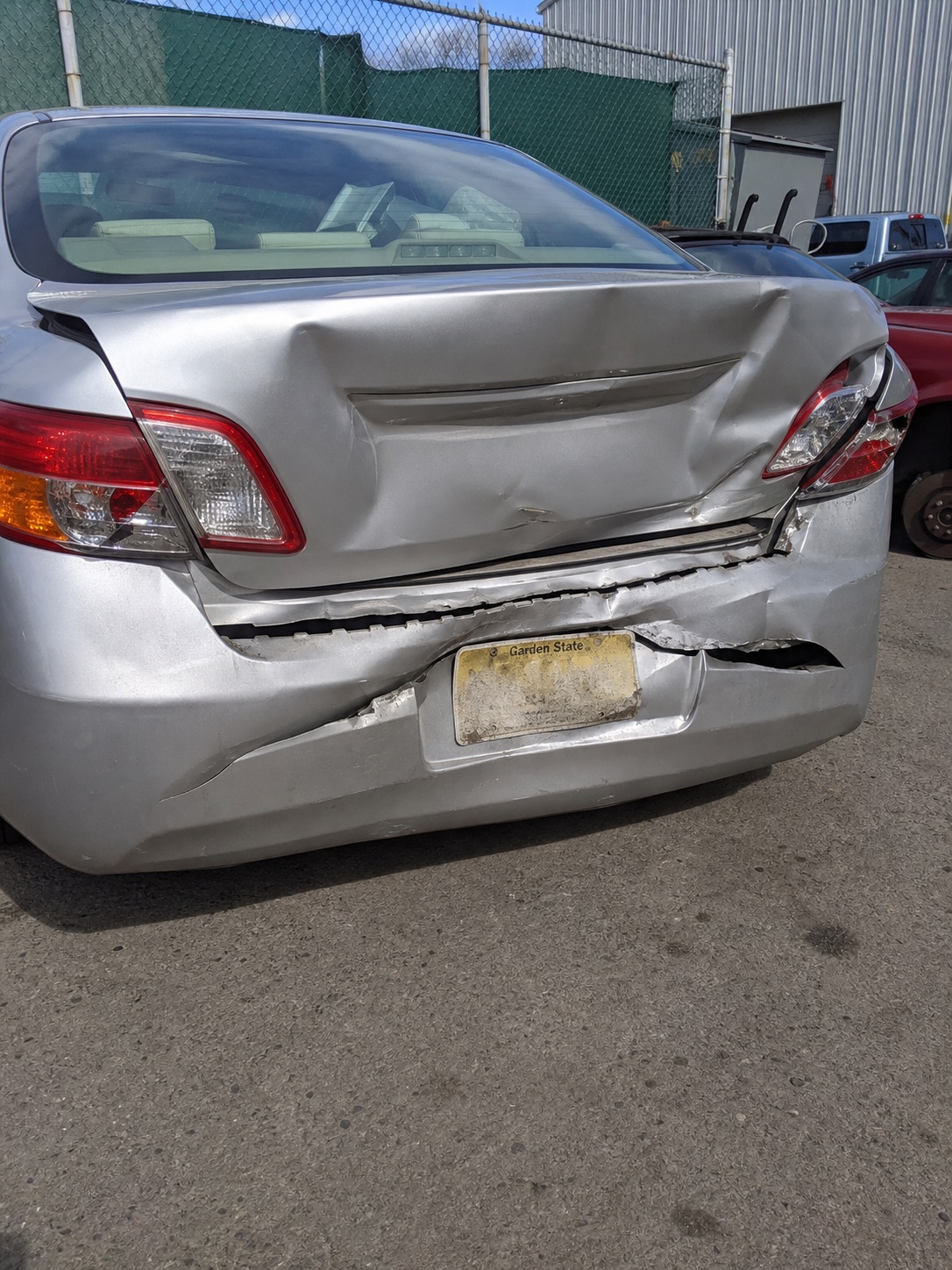
Save photographs for the questions they can answer
A wide photograph may show surroundings and the vehicles' positions when the image was taken. A close photograph can preserve visible damage. If vehicles moved before the pictures, note that fact. Do not label a parking-area image as the position at impact. Original files are preferable to having only a screenshot shared through several chats.
The generated mirror and bumper images in this article are illustrations. They do not show a real collision, measure a force or establish a repair cost. Your own image has limits too: it records what is in the frame. A damaged panel cannot diagnose an injury, and the presence of emergency lights does not establish a particular medical outcome. Keep the photo useful by explaining what it shows, rather than asking it to prove everything.
Make the health record a separate task
If you have health concerns after the collision, seek appropriate medical care rather than estimating injury from how the vehicle looks. When describing concerns to a clinician, explain what you have experienced and when you noticed it. Do not select symptoms because an article lists them or because another passenger mentions them.
Keep appointment information, instructions and bills in a separate part of your private file. The purpose is to find them again, not to judge the treatment yourself. If you receive a request for medical documents, confirm the recipient and the specific item requested before sharing records. An online inquiry should not become a public archive of your health information. The accident timeline and the treatment paperwork can be connected without treating them as the same document.
Write down the subject of each insurance conversation
A call about the bumper estimate can become a discussion about photographs, towing or another insurer. Give the conversation a clear label before it becomes a page of mixed notes. Record the company, representative, claim identifier and the item requested. Then ask who should receive it and how its arrival will be confirmed.
If you do not have a requested record, say so and ask what the representative means. Do not invent a missing number or turn an approximate recollection into a precise response. Save important written explanations in their original form. A call summary can help you remember, but it should be identified as your summary. Before assuming a question is resolved, check that the answer concerns the same claim and subject you asked about.

Prepare four focused questions for a review
A useful first discussion can begin with four questions: Is the location clear? Are all contacts in the sequence identified? Which documents are missing? Which insurer or professional is addressing each issue? You do not need to know fault or the value of a claim to ask them. Bring the records already available and make the gaps visible.
If a report uses different vehicle identifiers from your notes, explain the difference rather than quietly changing the notes. A witness may have a different view because they were in another position. Preserve that distinction. The goal is a file someone can understand and question, not a story designed to eliminate all uncertainty. Clear questions allow the next person to explain what information would actually help.
What this checklist does not decide
Organizing a rear-end accident account is useful, but it is not a ruling about responsibility. It does not establish that the rear driver was distracted, that a visible defect caused an injury or that a particular payment will follow. Those conclusions require the actual circumstances and appropriate review.
For urgent health or safety needs, use the relevant emergency or medical services. For questions about legal rights, consult a qualified lawyer with the records you have. Submitting an inquiry does not establish representation or guarantee acceptance. A sensible first action is smaller: preserve the original account, separate the subjects and choose the next unresolved question. That remains useful whether your record is a few files on a phone or a larger folder of correspondence.