Keep Hawthorne's listed approach sides intact
Do not convert the table's side labels into an invented compass direction for the car. First name its road and the side of the junction it approached from. That lets an investigator compare the actual approach with the schedule without assuming the motorist's signal matched the rider's.
| Junction | Schedule 505-59 approach labels | What the list does not show |
|---|---|---|
| Diamond Bridge Avenue at Lafayette | Diamond Bridge: east and west; Lafayette: north and south. | Which indication faced the car when it began turning. |
| Goffle Road at Goffle Hill Road | Goffle: north and south; Goffle Hill: west. | Goffle Hill and Goffle are different roads. |
| Type of restriction | The schedule is for right turns facing a steady red signal. | It is not a general ban on every right turn or a signal timing plan. |
Source check: October 13, 2026. Hawthorne Section 505-59.
The car stopped, then began turning
If you saw the car stop, describe where it was and what happened next. Did it remain there while you approached, begin moving as you came alongside or reach your path before you could pass its front? Those observations may help distinguish an early entry from a movement made when you were already close.
A hypothetical driver stops at a signal and then turns right while a motorcycle is approaching on the road being entered. In another hypothetical situation, a car comes from a driveway farther along the same road. The eventual contact may look similar, but the starting position and applicable controls differ. These are illustrations, not reported Hawthorne cases.
Do not estimate how long the driver waited if you were not watching throughout. Explain when you first noticed the car and whether you could see its wheels, signal or front end. The limit of your observation matters as much as the observation itself.
The car enters the rider's line of travel
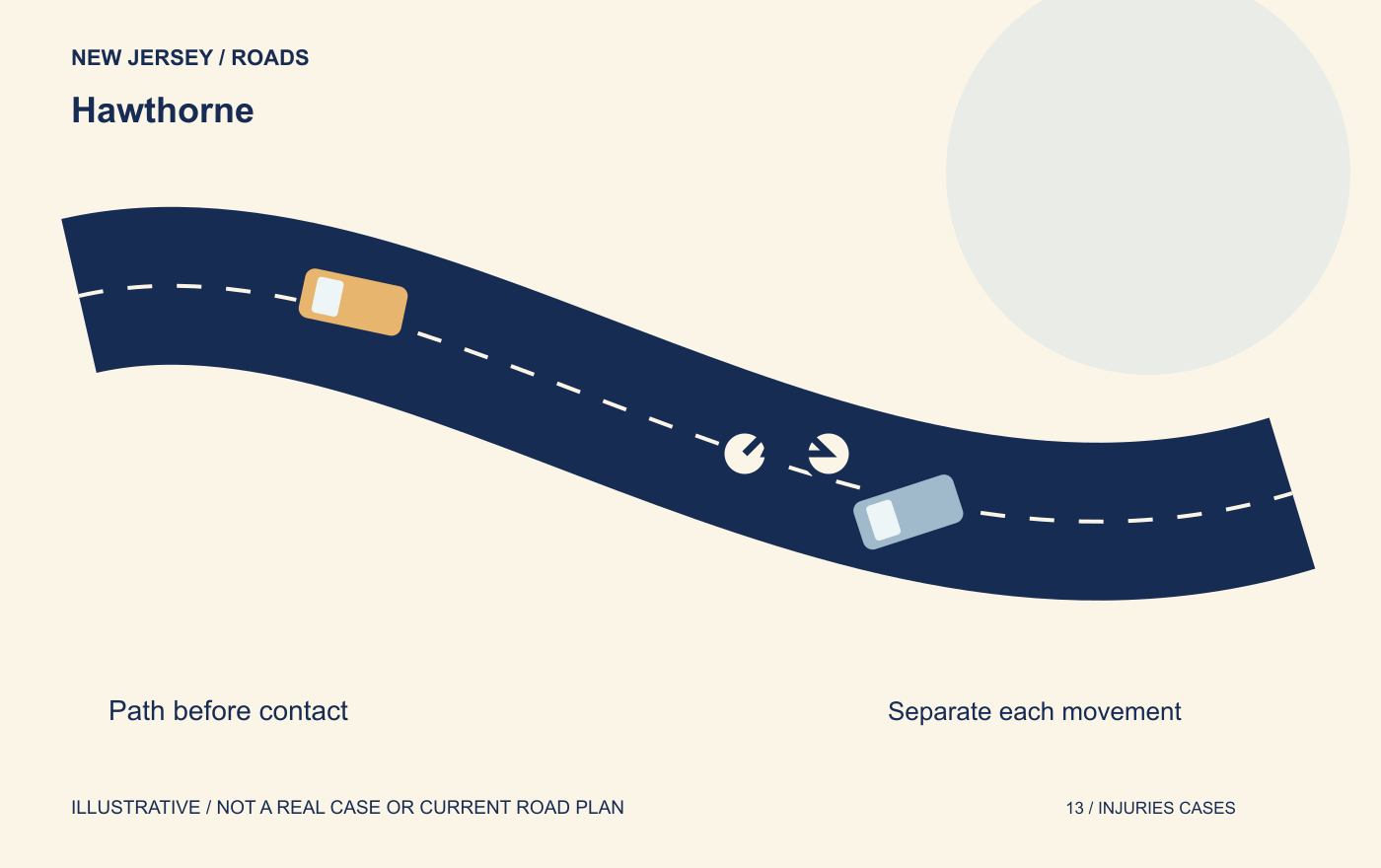
Describe how the motorcycle and car met. Did the car's front reach the motorcycle's side, or did your motorcycle contact the car after it moved across your path? If you do not know the precise first point of contact, explain what you remember without choosing from photographs alone.
Your road position before the turn can matter. Were you following another vehicle, beside it or traveling without a vehicle immediately ahead? If another car briefly blocked the view between you and the turning driver, describe that situation. Do not assume the motorist could or could not see you based only on the size of the vehicle.
Keep the motorcycle's movement after contact separate. A fall, slide or later contact with another object does not replace the question of how the other car entered your path. Equally, a final photograph of the motorcycle on the ground cannot show the whole approach.
Keep the local rule separate from the disputed movement
If you saw the car stopped at the corner, identify the moment it entered the space ahead of the motorcycle. A pause does not identify whether it later turned on red, green or another indication. Contact while you were stopped is also different from contact after you entered the junction.
Care and the next useful conversation
Call 911 for an emergency or an unsafe scene. Seek medical advice for injuries and follow the treating clinician’s instructions. Do not stop on an active road or ramp to reconstruct a collision.
For treatment payments, work losses, coverage and proposed releases, use the focused guides: New Jersey motorcycle accident help; An injured passenger’s separate questions.