Keep the bridge direction, first conflict and stop separate
An injured passenger may remember the bridge name and final stop more clearly than the first lane movement. Separate the route you intended, the place the other vehicle first reached your side and the place you later stopped. A Pennsville destination does not establish that all contacts occurred in New Jersey.
| Journey point | Operator's published locator | Collision question |
|---|---|---|
| New Jersey approach | Pennsville; NJ Turnpike, Route 130 and I-295 lead toward Delaware-bound lanes. | Which approach were you on when the other car entered your space? |
| Delaware approach | New Castle; I-295 and Routes 9, 13 and 40 lead toward New Jersey-bound lanes. | Did first contact happen before, on or after the crossing? |
| Final stop | The vehicle may stop beyond the first-contact point. | Do not use the stop's state as proof of the impact's state. |
Source check: October 13, 2026. Delaware River and Bay Authority bridge locator.
The first contact may come before the final stop
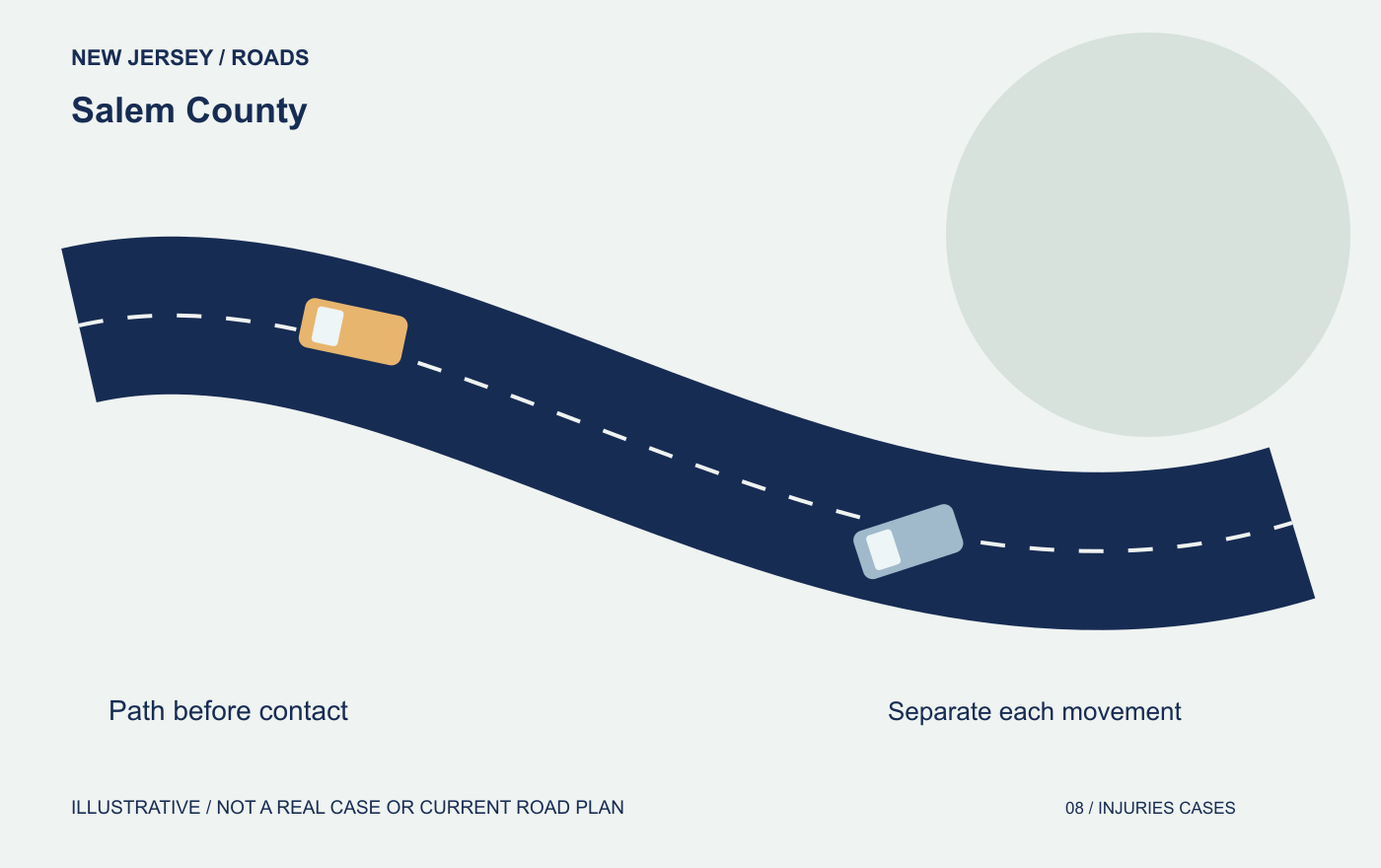
A car can make contact with you during a lane change and both vehicles may continue before stopping. If that happened, separate the moment of contact from what happened afterward. Describe where you first felt or saw the impact, when you braked and where you eventually stopped.
Your navigation app may show the position where you opened it after the collision. That can help identify your surroundings at that time, but it does not automatically mark the earlier impact. A passenger's photograph may similarly show a bridge view without locating the vehicles at the moment they touched.
If there were two impacts, explain them individually. A hypothetical car might cross into your lane, touch your front corner and then cause your vehicle to contact another car. That is an illustration of a possible sequence, not a local case. It should not be summarized as one rear end accident without explaining the earlier lane change.
A driver changes lanes to correct the route
Someone who realizes they are in an unwanted lane may try to move across traffic rather than continue along it. If another driver did that beside you, describe how far alongside your car they were before moving. Were they ahead of your front bumper, level with your door or behind you when the movement began?
Do not assume their motive merely because an exit or bridge approach was nearby. You may have seen a turn signal, a sudden steering movement or a vehicle crossing more than one lane. Those are observations. A claim that the driver was following the wrong directions needs additional support.
Also describe your own position. If you were changing lanes too, explain the timing rather than leaving it out. A reviewer needs to consider both movements. A signal expresses an intention, but the signal alone does not show whether the space was clear or which vehicle entered it first.
Keep the local rule separate from the disputed movement
Keep three short location notes: approach road and direction; first contact and any subsequent impact; final stop and responders. Mark any point reconstructed from a route record rather than personally observed. That helps someone assess the cross-border facts without this page choosing applicable law or offering a compensation formula.
Care and the next useful conversation
Call 911 for an emergency or an unsafe scene. Seek medical advice for injuries and follow the treating clinician’s instructions. Do not stop on an active road or ramp to reconstruct a collision.
For treatment payments, work losses, coverage and proposed releases, use the focused guides: New Jersey car accident help; PIP and medical billing.