Place the event on the corridor, not just near a shop
A driver may describe an accident by a shop, office or appointment destination. That can orient the trip while still leaving the collision point unclear. Start by distinguishing Route 70 itself from a connecting road, an entrance and a property interior. Then add the direction and nearest cross street or sign you reliably remember.
NJDOT’s corridor project runs from Route 38 to Cooper Avenue and includes Pennsauken and Cherry Hill in Camden County and Evesham in Burlington County. That background is broader than Cherry Hill alone. If you are uncertain about the municipality, keep the road detail and uncertainty together. Do not choose Cherry Hill merely because the journey was headed there. The correct local description should emerge from the actual location records, not from the name most familiar to the traveler.
Describe the movement before you describe the impact
The key question may be whether you were traveling along the road, waiting at a signal, taking a connecting movement or entering a property. Write that movement in ordinary terms before labeling the collision. A broad description such as “turning crash” can leave out whether your vehicle had begun to move or was still waiting.
NJDOT’s project background refers to jughandles and traffic signals along the corridor. It does not establish which access or signal applied to your event. If you remember following a separate turning route, describe the signs and path you observed without assigning a particular maneuver from a generated picture. Record any part you did not see. The next reviewer can then ask about that part rather than starting with a turn configuration you guessed from a map.
Separate the signal you saw from other signals
At a signalized location, “the light was green” may be too broad. Identify which signal you observed, what movement you were making and when you saw it. If your observation was earlier in the approach, preserve that timing. If another vehicle blocked the view later, explain the limit rather than filling in the signal state.
You may not have seen the signal controlling a different vehicle. Do not assign its color solely from the movement you believe should have been permitted. A passenger’s account can supply another observation if it is attributed correctly. Keep remembered instructions, markings and other road users separate from a conclusion about who had priority. The event can raise a specific legal question without the notes themselves deciding it.

Use property features as observations, not assumptions
A driveway, curb or entrance may matter to a collision description, but an address does not prove which entrance a vehicle used. Record the access point if you know it, and say when the business name is only a landmark. Receipts and appointment records may explain the destination or timing without establishing the maneuver.
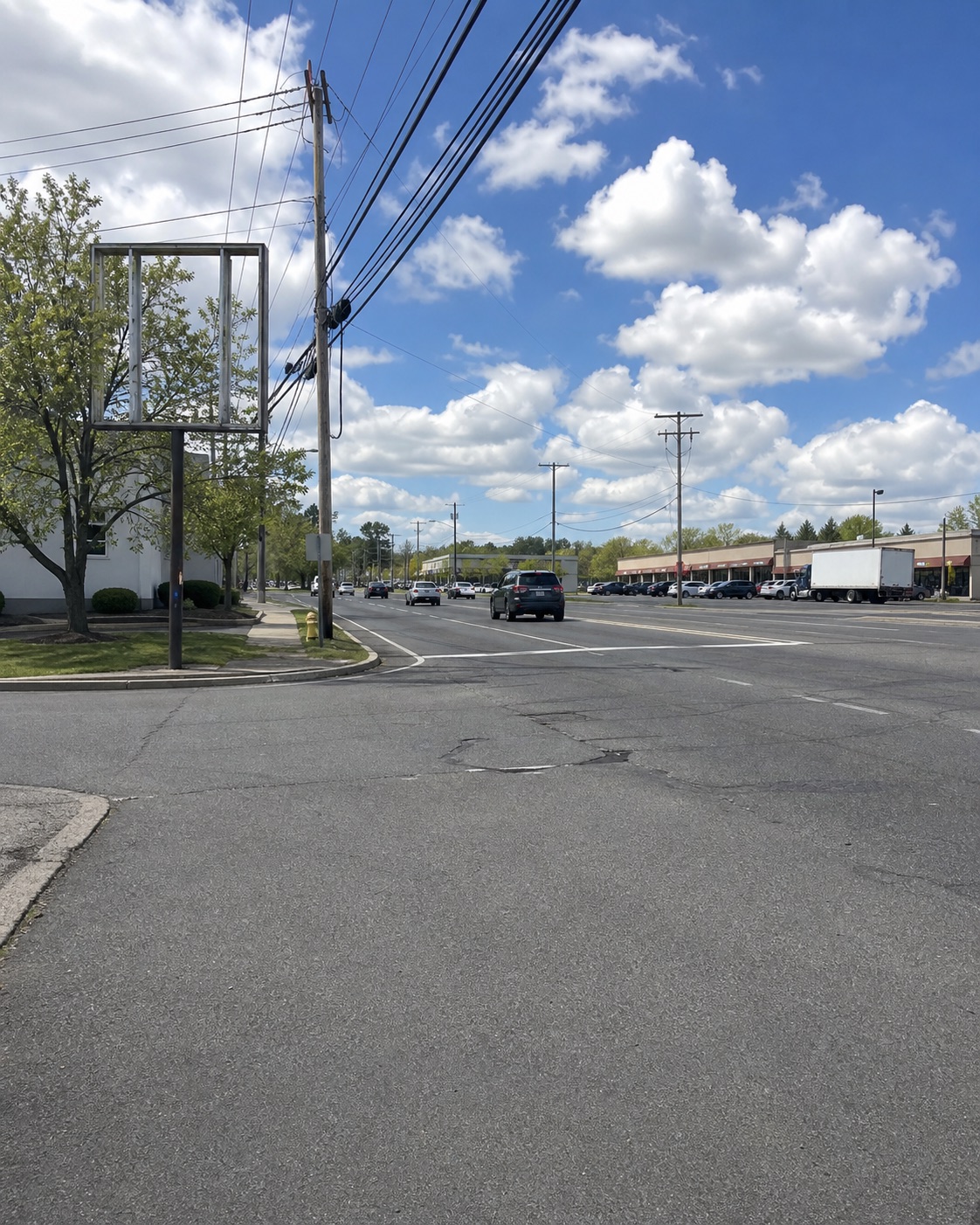
The Route 70 illustration shows a commercial-road setting with utilities, buildings and an access area. It is generated imagery inspired by local features, not a photograph of a verified Cherry Hill collision point. It cannot establish current signs or permitted movements. If you use your own photographs, explain whether they show the impact position or where vehicles moved afterward. Keep each image attached to the question it can actually help answer.
Identify the report contact before using a local shortcut
If responders provided an agency name or incident reference, preserve that information first. A corridor crossing several municipalities makes it unwise to identify a report agency solely from a destination, nearby business or a website headline. Ask which organization handled the event and what reference it needs to locate the record.
A number from an insurer or a service provider may not identify the police report. Label all references by their source. If you have no agency information, explain the date, road and known location when asking about the appropriate contact. Record the reply rather than continuing to send the same request to guessed recipients. An unsuccessful inquiry at one office does not establish that no report exists. It may identify a missing detail needed for the next request.
Keep health records distinct from repair material
If you have health concerns, seek appropriate medical care and describe your actual experience. Do not compare your symptoms with a vehicle picture or infer an injury from the collision label. Keep appointment instructions and treatment paperwork in their own part of the private file.
Create a separate vehicle entry for photographs, service documents and an estimate when available. Each request should identify which record is needed, which claim it concerns and where to send it. A claim conversation can move between subjects quickly; write the subject beside the contact details. The generated damaged mirror image does not indicate the severity of an injury or an actual repair amount. It illustrates why a damage record, a medical record and an accident sequence are different pieces of information.

Check a construction notice against the date and location
A search for Route 70 can produce project pages and traffic notices describing different stages. The official corridor overview contains planning and historical material, including schedules. Its presence online does not establish that an operation was active at your point on the day of the accident. This guide makes no current closure or construction claim.
If you observed a temporary sign, barrier or changed path, record what you saw and when. Then preserve any relevant official notice with its publication date and stated scope. Do not substitute a general project map for a dated accident-day arrangement. A project may help frame a question about a feature, while evidence is still needed to connect that feature to the collision. Treat background, observed conditions and causation as separate subjects.
Prepare a contact list that follows the documents
A short private index can list the report contact, insurer, service provider and professional consulted. Beside each, put the reference number, current question and requested item. This lets a later call begin with the right subject rather than another general retelling of the collision.
When sending material, verify the recipient and keep a copy of the submission. Ask how receipt will be confirmed. If you are asked for a document you do not possess, explain that and request clarification. A request list can show what remains unavailable without creating a false impression that the file is complete. Avoid public sharing folders containing other participants’ identifiers, booking information or medical records. Organization should make appropriate review easier while keeping unrelated personal details out of the exchange.
Finish with the uncertainty that needs an answer
Your first summary can identify the stretch of road, the movement, the documents you have and the point that remains unclear. That might be the agency reference, which signal you actually observed or whether an estimate reached the correct claim. A focused question is more useful than asking someone to endorse an entire theory of the event.
This guide does not establish legal priority, fault, coverage or compensation. A Route 70 address is a location, not a prediction about the result. For legal questions, discuss your actual records with a qualified lawyer and ask what the proposed next step involves. An online inquiry does not establish representation. Start with the practical distinction that often improves the file immediately: separate the trip destination, the maneuver and the location where the vehicles ended up.