Start with immediate needs and a clear location
A collision on an elevated road is not the moment to collect every detail for an insurance file. Address urgent safety or medical needs through emergency services and follow the instructions of dispatchers and responders. This article cannot assess a live scene or tell you which movement is safe. A general instruction to pull onto a shoulder may not fit the road you are on.
NJDOT’s Pulaski Skyway history describes its typical roadway section as having no shoulders, and states that pedestrians are not allowed on the Skyway. Those details explain why a generic roadside checklist should not become a plan to walk around the structure. When describing your location, identify the road, direction and last sign you actually remember. Say when a detail is uncertain rather than guessing to provide a complete answer.
Distinguish the Skyway from roads approaching it
NJDOT describes the Pulaski Skyway as carrying Route 1&9 and connecting Jersey City, South Kearny and Newark. That is a corridor description. It does not mean every collision on an approach road occurred on the elevated structure itself. Write whether you were already on the Skyway, entering it, leaving it or unsure where the transition occurred.
Your destination can help explain a trip but is not proof of road direction. “Going to Jersey City” and “on a connecting ramp toward Jersey City” may leave different location questions. If a sign or landmark gives you a more specific point, preserve its wording as you recall it. Do not assign the nearest municipality from a map to the accident as though you read it at the scene.
Make the first account about movement, not blame
Describe your vehicle’s movement before contact: continuing in the lane, slowing, stopped in traffic or changing position. Explain what you saw the vehicle nearby do, separately from what you think its driver intended. If your account begins with a sound or jolt, keep that as the beginning rather than constructing an earlier sequence.
On an elevated route, a recollection of space beside the vehicle may matter to your description. Record that as an observation rather than concluding that there was a safe escape path. If you remember more than one contact, list them in order as far as you can. A barrier, a nearby vehicle and later damage can raise questions, but their presence does not supply the whole sequence. A clear record can acknowledge that part of it was outside your view.

Document what was available without revisiting the road
If photographs or messages already exist, preserve them. Note where and when each was created, and whether vehicles had moved by then. A picture after recovery may show damage well while giving no reliable view of the original position. It belongs in the file with that explanation.
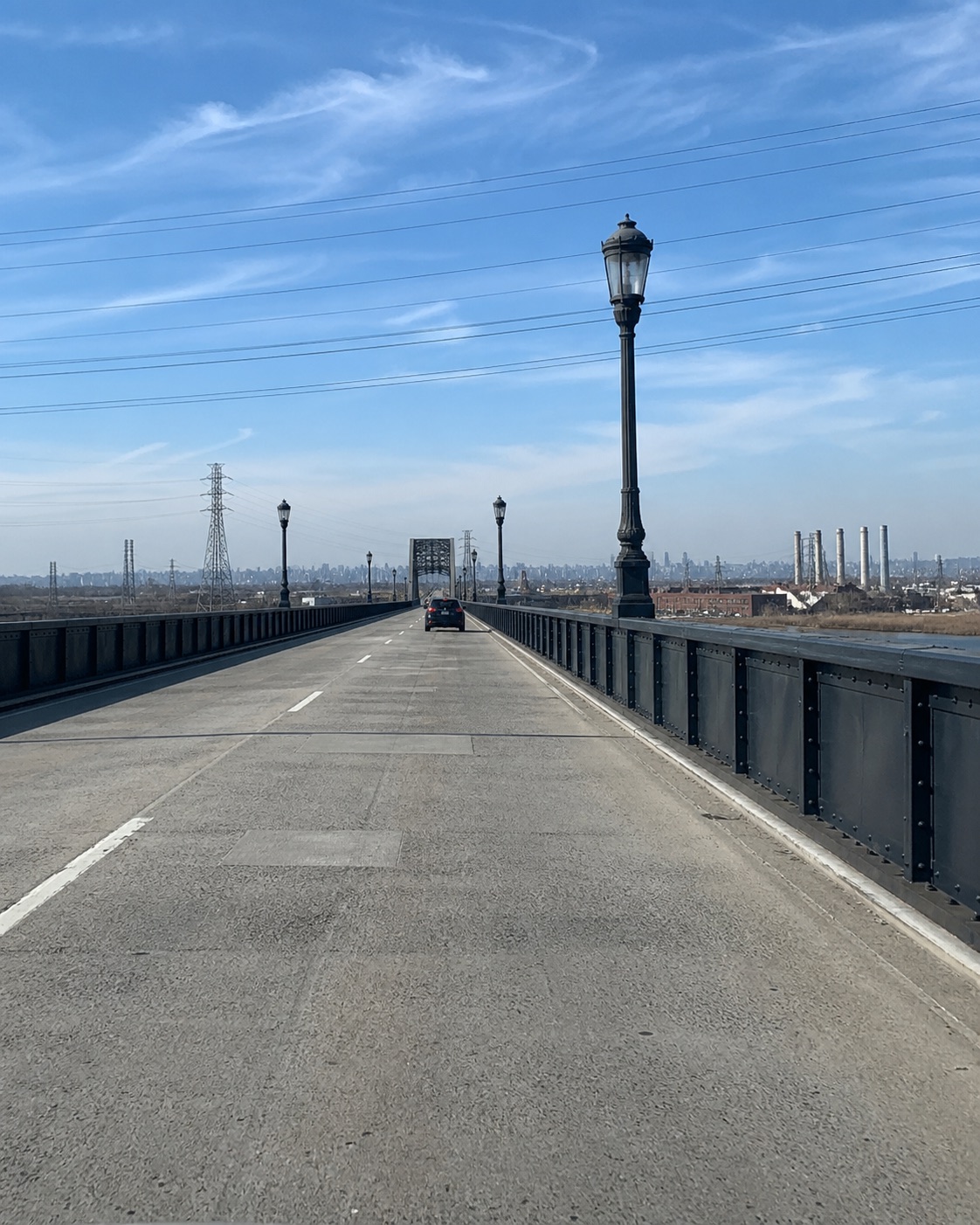
Do not plan a pedestrian return to the Skyway to obtain the missing view. The generated image in this article evokes the elevated road and its railings, but it is not evidence of the configuration on an accident date. Its skyline and lane depiction cannot establish your location or available space. A gap in documentation is better than a risky attempt to fill it. Ask the professional reviewing the event which additional material would be relevant and how it can appropriately be obtained.
Identify the response record by its source
Afterward, gather the information you already have from responders: an agency name, card, incident reference or instruction about follow-up. Label each number by the organization that supplied it. A tow receipt number, insurer claim identifier and police report reference can serve different purposes. Do not treat them as interchangeable because they relate to the same event.
The Skyway corridor connects several municipalities, so the nearest familiar place does not by itself identify the agency that handled your incident. If you lack the agency name, explain the road, approximate location and date when asking how to identify the record. Seek the correct contact or process rather than assuming one from geography. Keep the response, including clarification that a particular office is not the right one.
Keep recovery and repair steps in a separate timeline
A vehicle may be moved, recovered, stored or inspected after an accident. Make an entry for each step you can document: the provider, destination, date and available paper. Keep the original receipt or instruction where possible. If a vehicle location changes, record the change without describing each new address as the collision location.
When an insurer asks for an estimate or photographs, confirm which claim and recipient it means. An image of a cracked mirror cannot tell you the full repair scope, just as the illustration here cannot establish an actual claim cost. Ask what assessment or record is needed. A clear recovery timeline also makes it easier to explain why a photograph shows the vehicle away from the Skyway and why that photograph should be read as aftermath rather than scene evidence.

Use historical road information for the right question
The NJDOT history page supplies road background and a description of the typical section. It also contains historical material, with a displayed update date in 2024. That makes it useful for understanding the structure, but not a source for announcing current work, lane closures or the arrangement during your collision.
If a temporary feature matters, find information tied to the accident date and specific stretch. Preserve its publication date and the dates it describes. A rehabilitation project existing in the corridor does not establish that an operation was underway at your location. Avoid importing old traffic totals or speed references into your account. The practical issue is what applied to the particular journey. Background can orient the question without answering it.
Prepare a short handoff for the next contact
Before a claim call or consultation, prepare a compact summary: road and direction, whether you were on the elevated section or an approach, contacts remembered, responding agency if known and available records. Then list one or two unresolved questions. Perhaps you need the report reference, clarification of a pickup address or the appropriate recipient for an estimate.
Keep your own observations separate from a passenger’s or witness’s account. A person behind you may have seen a different stage; that can be useful without being merged into your memory. Share private identifiers and records only through an appropriate channel with a verified recipient. A concise handoff reduces repeated storytelling while leaving the actual facts and uncertainties available for review. It need not include a prediction about fault or compensation.
Know what the road name does not decide
A Pulaski Skyway collision can create practical questions about location, response and paperwork. The road’s form does not automatically establish why the event happened, who is responsible or whether a particular expense is covered. Those issues need the actual circumstances and appropriate professional advice.
For health concerns, seek appropriate care; a damage image is not a medical assessment. For legal questions, speak with a qualified lawyer and ask about the proposed relationship and next steps. An inquiry does not establish representation or guarantee a result. Your useful first task is to preserve the evidence already available and identify what is missing. That can be done without walking the Skyway, recreating the drive or making the accident account more certain than your knowledge allows.