Begin with the path you were taking
After a pedestrian collision, the phrase 'crossing the road' can conceal important differences. You may have been on a sidewalk, crossing an entrance, waiting near a curb or moving through an intersection. Describe where you were and the direction you were heading before trying to explain the entire event. A simple sketch can show your route without becoming a conclusion about legal priority.
Use the nearest intersection or feature you remember, but leave an uncertain road name uncertain. If someone later helps you identify it, record that source. Do not force a location from an online image that merely looks familiar. Your immediate health and safety needs come first. Documentation can begin with the records and recollection you already have; it does not require returning to the road.
Separate a marked crossing from the signal you observed
If you remember a crosswalk, describe where it was in relation to your path. If you saw a pedestrian signal or traffic light, explain which one and when. Seeing a signal at the start of an approach is not necessarily the same as observing it immediately before contact. If you did not see the signal controlling the vehicle, avoid supplying its state by assumption.
NHTSA's pedestrian guidance emphasizes attention to signs, signals and other road users. That is safety guidance, not a finding about your accident. Keep observations precise enough that another person can understand what you saw. The presence or absence of a painted crossing does not allow this article to determine fault. The event, location and applicable rules need appropriate review.
Identify the vehicle movement if you saw it
Was the vehicle turning, moving straight, backing or entering or leaving a property? These are useful questions, not a menu from which you must choose a confident answer. If you first became aware of the vehicle at contact, explain that. A later photograph may help identify the vehicle but may not show its earlier movement.
NHTSA specifically advises pedestrians to watch for vehicles at driveways and vehicles backing in parking areas. Those are contexts worth distinguishing in a record. They do not prove what happened in your case. Note whether another vehicle, parked object or other feature affected your view. Avoid deciding that the driver's view must have been identical to yours. Keep both the observed movement and the gaps available for someone examining the actual scene.

Record your viewing position and the surroundings
A person standing at a curb sees a different scene from someone halfway across the street or beside a parked vehicle. Identify your position when you made a particular observation. If your view changed as you moved, distinguish the stages. Note light or weather conditions only as you experienced them, rather than turning a general description into a technical explanation of the collision.
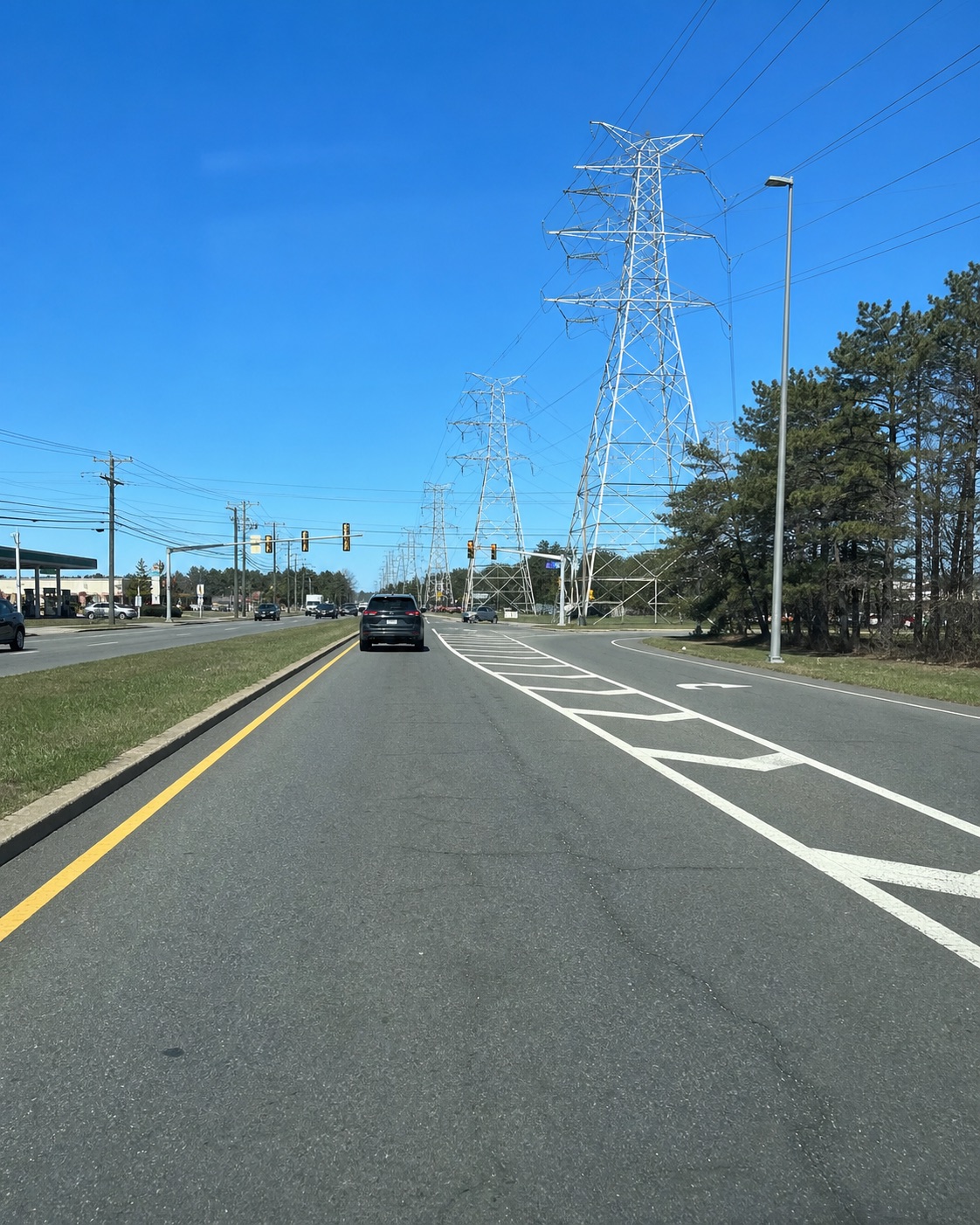
The Route 37 image included here is generated geographic illustration. It is not a pedestrian accident photograph, a verified crossing or evidence of road conditions at a particular time. A road can be used to explain why entrances, signals and sight lines deserve description without claiming that a collision occurred there. Your own accident records should not inherit details from this illustrative scene.
Give witnesses their own place in the file
If you have witness contact information, store it privately and label how it was obtained. Ask for an account in the witness's own words rather than proposing a story for agreement. Where the person was standing matters, because they may have seen something outside your view. Keep their observations attributed rather than merging them into yours.
A witness may recall only a sound or the aftermath. That limit should remain visible. An account does not become more reliable because it includes a confident conclusion about responsibility. If you have a message from a witness, preserve the original and distinguish it from a summary you later write. Avoid publishing personal contact details in a social-media request for help. A qualified professional can explain appropriate use of the information where necessary.
Keep photographs and recordings accurately labeled
Photographs may preserve a crossing, a driveway or visible vehicle damage. Note when they were taken and whether the scene had changed. A photograph from another day may show geography but not the accident-day conditions. Keep an original copy before making an annotated version for your own explanation.
If a nearby camera raises the possibility of a recording, treat it as a question. A visible camera does not show that it captured the event or that footage is available. Record any inquiry and response without describing a requested recording as evidence already obtained. The mirror image in this article is generated illustration, and emergency lights do not establish a particular injury or outcome. Avoid returning to traffic or risking safety to improve a picture.

Keep health and administrative paperwork separate
For health concerns, seek appropriate medical attention and describe what you experienced. Do not use a photograph of a car or the speed you assume to decide whether care is warranted. Your records should preserve actual instructions and appointments rather than an injury assessment made by an online article.
Create a separate place for report information and insurance correspondence. Record the sender, reference number and purpose of a request. Ask which records are needed before sharing personal or medical material, and verify the destination. Different organizations may use different identifiers for the same event. Label them by source instead of assuming a number supplied by one contact will identify the file for everyone else. Keep copies of relevant submissions and responses.
Prepare a location summary with clear limits
A useful first summary can identify the road or access area, your path, the movement you observed and the part you cannot describe. It can also say which records you possess and which remain unavailable. You do not have to resolve fault to explain that you want help understanding the event.
This guide preserves the scene; it does not decide a pedestrian's legal rights or guarantee compensation. NHTSA's safety recommendations are not a substitute for reviewing the actual circumstances. Health needs belong with appropriate clinicians, and legal questions belong with a qualified lawyer. An online inquiry does not establish representation. Your next practical task may simply be locating the report reference or writing your independent account while the information available to you is still clear.