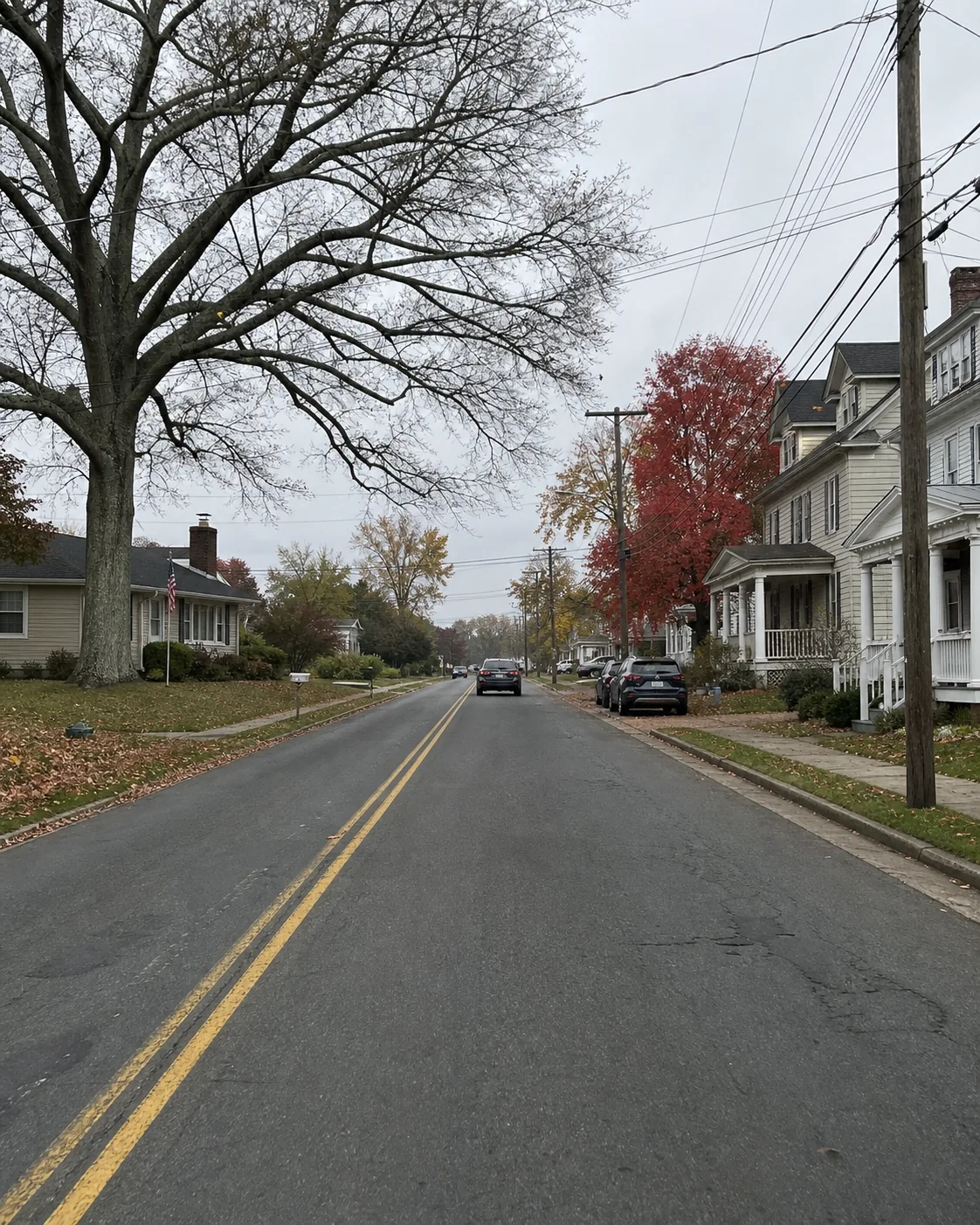
Route 35: property exit, opposing turn or car already beside you?
The NJDOT reference identifies separate Eatontown, Shrewsbury and Red Bank segments. Name the opening or junction you actually saw, even if your destination was Red Bank.
| Car's origin | Observation to explain | Question still open |
|---|---|---|
| A property entrance | Front of the car before it reached the road | Which opening and direction did the driver use? |
| Opposite travel direction | Turn beginning across the motorcycle's approach | Which vehicle path and signal did you actually see? |
| Same direction beside the rider | Lateral movement before contact | How long had the motorcycle occupied that space? |
Describe direct contact and the subsequent fall separately. A driver saying the rider appeared suddenly is an account to test, not a measured speed or completed fault finding.
This section uses the linked official resources checked on October 13, 2026. It is an editorial comparison, not original crash data or a finding about your case.
Identify the Route 35 opening before attributing a pull-out
A car leaving a property and a car turning from an opposing road position can reach a rider differently. Describe where you first saw the vehicle and the road you occupied. If its origin was hidden, retain that uncertainty rather than assigning it to the nearest shopping entrance.
NJDOT's Route 35 reference supplies municipal geography. It is not motorcycle crash data or an account of the current control at every entrance.
When a car pulls out in front of a motorcycle
One possible collision begins with a car leaving a driveway while a motorcycle approaches in the travel lane. Another begins with the car edging into traffic, then crossing farther than expected. The rider may strike the car or be struck along the motorcycle's side. These examples illustrate movements to investigate; they are not reports of a specific local case.
Describe where you were when you first saw the car, whether it stopped before moving and which part of each vehicle made contact. If your view was blocked by traffic, say that. Do not turn an uncertain glimpse into an exact speed or distance estimate.
The driver may say they did not see the motorcycle. That statement does not resolve whether they checked adequately or entered safely. A recording, witness account or other evidence can help test the sequence. The fact that the motorcycle contacted the car also does not, by itself, settle who caused the collision.
A left turn raises a different set of questions
A driver turning across an approaching rider may argue that there was enough time or that the motorcycle came from nowhere. The relevant facts include both vehicles' directions, the turn's starting point and the rider's position before the paths crossed.
Explain whether the car was coming from the opposite direction or turning from a side approach. If a signal was involved, describe what you actually observed. Someone reviewing the claim needs the particular junction and movement, not an assumption that every Route 35 turn operates the same way.
For a Monmouth County motorcycle accident consultation, mention any witness who saw the approach rather than only the motorcycle on the ground afterward. The earlier view can matter when the dispute concerns how much time the turning driver had to recognize you.
What if the car changed lanes into you?
On a motorcycle, a side impact can have consequences that are not captured by a photograph of a scraped mirror. Describe whether the car moved across a lane line, whether it was passing another vehicle and whether it continued moving after contact.
If the driver says the rider was in a blind spot, the question remains how the lane change was made. A claimed blind spot is an explanation to investigate, not a completed fault assessment. Keep any original recording showing the vehicles before the move.
A rider and a passenger may experience different injuries and have different views of the same seconds. Each should describe their own position and recollection. You do not need to make the accounts identical where one person saw something the other could not.
Assess the rider and driver on the actual movements
For the Route 35 conflict, distinguish a car crossing from an opposing approach, pulling out of a property or moving from an adjacent lane. Describe the bike's direction and when the car entered its path. Keep the rider's subsequent braking or fall separate from the car's initial movement, and distinguish direct contact from an avoidance event. The route name alone does not establish fault. Use statewide motorcycle guide for the broader claim.
Injuries after a Route 35 motorcycle collision
Seek medical advice after the crash and call 911 for an emergency. Tell the clinician whether a car struck you, whether you were thrown from the motorcycle and which parts of your body made contact. Do not judge an injury solely by whether you were able to stand immediately afterward.
Keep the helmet and damaged riding equipment if available. Ask the person advising you before discarding items that may help document the impact. Retaining equipment does not mean it is safe to reuse, and an article cannot assess that question for you.
Explain the limitations that affect your life: difficulty gripping, walking, sleeping or doing your usual work. If symptoms change, tell the treating professional. Your treatment decisions should be guided by your condition rather than by an online settlement figure or pressure to finish the claim quickly.
Motorcycle insurance needs its own review
The payment route needs your actual policies and role in the collision. A local turn, road name or report does not decide medical-benefit eligibility. Use the statewide motorcycle injury and insurance guide to separate treatment payment from responsibility; retain any written coverage explanation for individual review.
What to ask a Monmouth County motorcycle accident lawyer
Ask how the pull-out, turn or lane change will be investigated. Ask what would support or weaken a claim that the other driver crossed your path, and how treatment costs and ongoing limitations will be considered.
If an early offer has arrived, bring its wording. Ask whether it would settle injury claims, property damage or both. Also ask about fees, expenses and who will communicate with you while the case is assessed.
You can start with the information you have. The immediate purpose of a consultation is to understand your collision and choices, not to prove that Route 35 is the worst road in the county or decide a settlement value from someone else's experience.
Advertisement: Start the New Jersey accident quiz. It opens in English. Injuries Cases Autos provides general information and is not a law firm. No representation, compensation or outcome is guaranteed.