A terminal landmark does not turn every stopped car into a pickup
Near the terminal, the useful passenger question is whether your ride was already carrying you through Clinton Avenue, stopped with traffic or beginning to pull away from a curb. An app destination, terminal name or complaint about the driver’s route cannot choose among those movements.
| Local detail | NJ TRANSIT's current page | What the passenger should distinguish |
|---|---|---|
| Terminal | 1085 Clinton Avenue, Irvington. | Passing the terminal during a through-trip versus stopping near it. |
| On-street parking information | Short-term limits; page shows no standard off-street spaces for the listed lot. | A parking listing does not designate an Uber/Lyft pickup zone. |
| Vehicle movement | Stopped, pulling from the curb or turning during travel. | Where your ride and the other car were before contact, not only the app pin. |
Source check: October 13, 2026. NJ TRANSIT Irvington terminal.
When another driver hits your stopped ride
In a hypothetical example, an occupied rideshare is stopped in traffic on a local street when a following car reaches its rear. In another, a neighboring car contacts the side as it passes a vehicle stopped near the curb. These illustrations are not actual Irvington cases.
Explain why your vehicle was stopped if you know. You may have heard the driver discussing the next turn, seen a red signal or been preparing to leave the car. Distinguish that observation from an assumption that the stop was for a pickup.
Tell the reviewer whether the car moved before impact. If you were looking at your phone, say which part you did not see. You may still be able to describe the impact direction and what happened around your seat without inventing the other driver's approach.
A pull-out differs from a through-trip turn
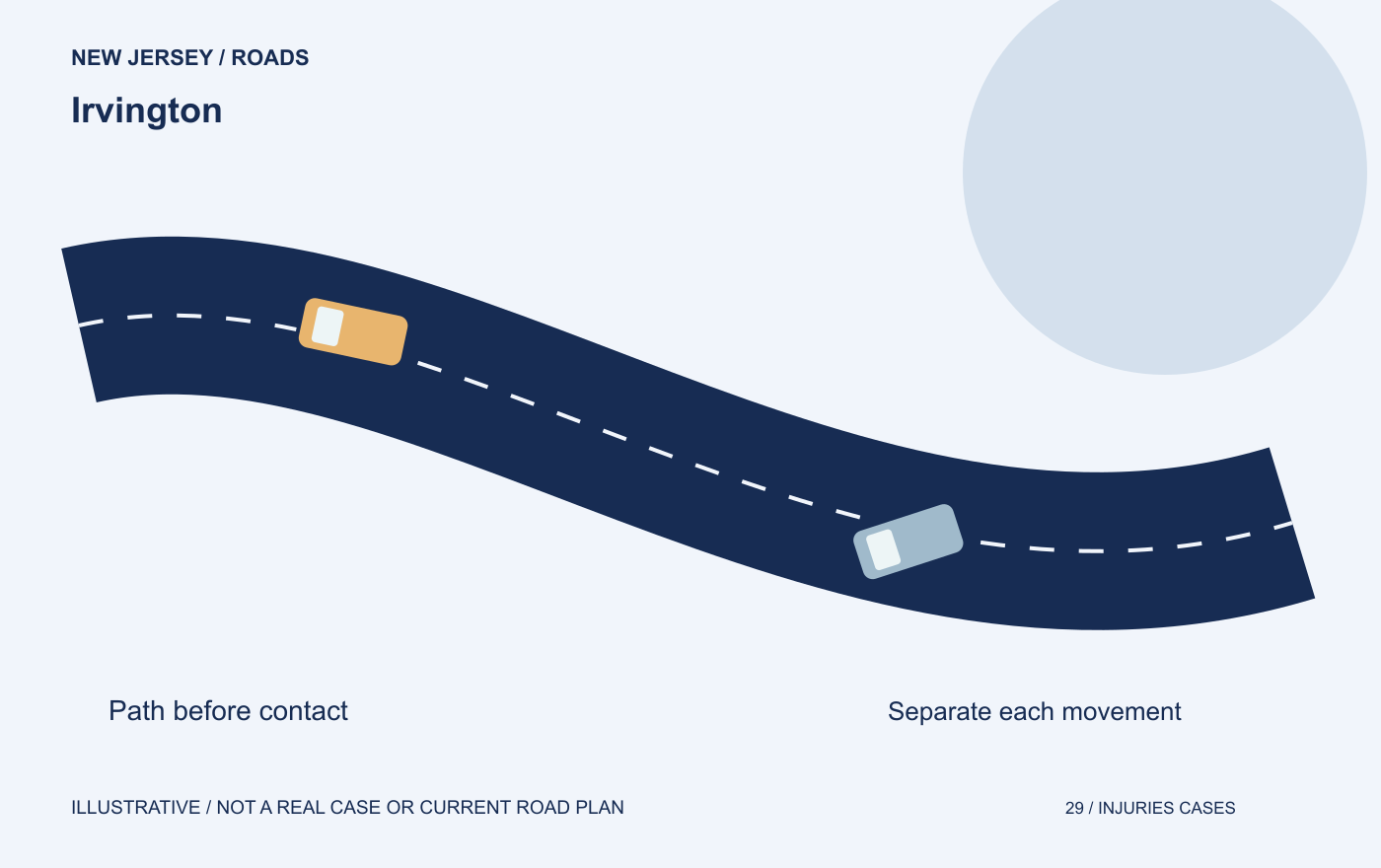
If the vehicle carrying you began moving from a curbside position, describe that starting position and the other car's path. If you were already traveling when another driver turned across your ride, start with that separate movement.
A rideshare accident can involve more than one driver's contribution. Explain the maneuver of your driver as well as the vehicle that contacted yours. Being a passenger does not mean you must choose a complete fault account before asking for help.
If the first conflict occurred during a turn and the cars touched again afterward, separate the stages. A short app route line cannot reconstruct the impact. It may help show the trip context, while an original recording or a passenger's observations address a different part of the sequence.
Keep the local rule separate from the disputed movement
If the app ended or cancelled the ride after contact, keep that later status separate from the moment you were struck. Preserve the trip details you have and describe your actual boarding/seat position. The rideshare hub covers the general policy stages; this page stays with the Clinton Avenue stop-versus-through movement.
Care and the next useful conversation
Call 911 for an emergency or an unsafe scene. Seek medical advice for injuries and follow the treating clinician’s instructions. Do not stop on an active road or ramp to reconstruct a collision.
For treatment payments, work losses, coverage and proposed releases, use the focused guides: New Jersey rideshare accident help.