Start with the part of the collision you experienced
Several damaged vehicles can make an accident account feel as though it must explain the entire chain. You may only know what happened around your own vehicle. Begin there: your road, direction, lane if known and what the traffic immediately ahead was doing. A limited firsthand account is a useful record, even if someone else observed the beginning of the event.
Write what you saw before adding what you learned afterward. If you heard a collision behind you but did not see it, record the sound without assigning it to a specific pair of vehicles. If you were looking elsewhere, say so. The practical aim is to preserve your viewpoint. You do not need a complete reconstruction before asking a professional which additional records could help.
Number the contacts without inventing their cause
Make a sequence using the events you remember: first sound, first movement, contact ahead and any later contact. Beside each item, note whether it was seen, heard or felt. Numbering the sequence can make it readable while leaving uncertainty about which vehicle made a particular contact.
Two jolts do not by themselves prove two distinct drivers were responsible. A damaged front and rear does not establish the order of impacts without more context. If you cannot distinguish the sequence, record that explicitly instead of choosing an order that matches a drawing found online. Preserve a later explanation from another participant as that person's account. It can be considered alongside yours without being rewritten as an event you personally witnessed.
Give vehicles consistent labels
A simple vehicle key helps when several cars have similar colors or shapes. Start with what you can reliably identify: your vehicle, the white van ahead or the dark car beside you. Keep the labels consistent through your notes. Do not assume that a label in your sketch matches the official vehicle number in a report.
If the report later supplies numbers, make a separate cross-reference where the identification is clear. Leave a question mark where it is not. A vehicle listed on a document may be identified from information you did not see at the scene. Do not guess the match simply to complete the table. Personal identifiers and contact details should remain private, with the records needed by appropriate recipients rather than posted publicly to crowdsource the sequence.

Preserve the scene before and after vehicles moved
Vehicles can change position after contact, so distinguish the location at impact from the location shown in later photographs. A wide image can help explain the surroundings when taken; a close image can show visible damage. Neither should silently be used for a different purpose. Note the source and time of each file where available.
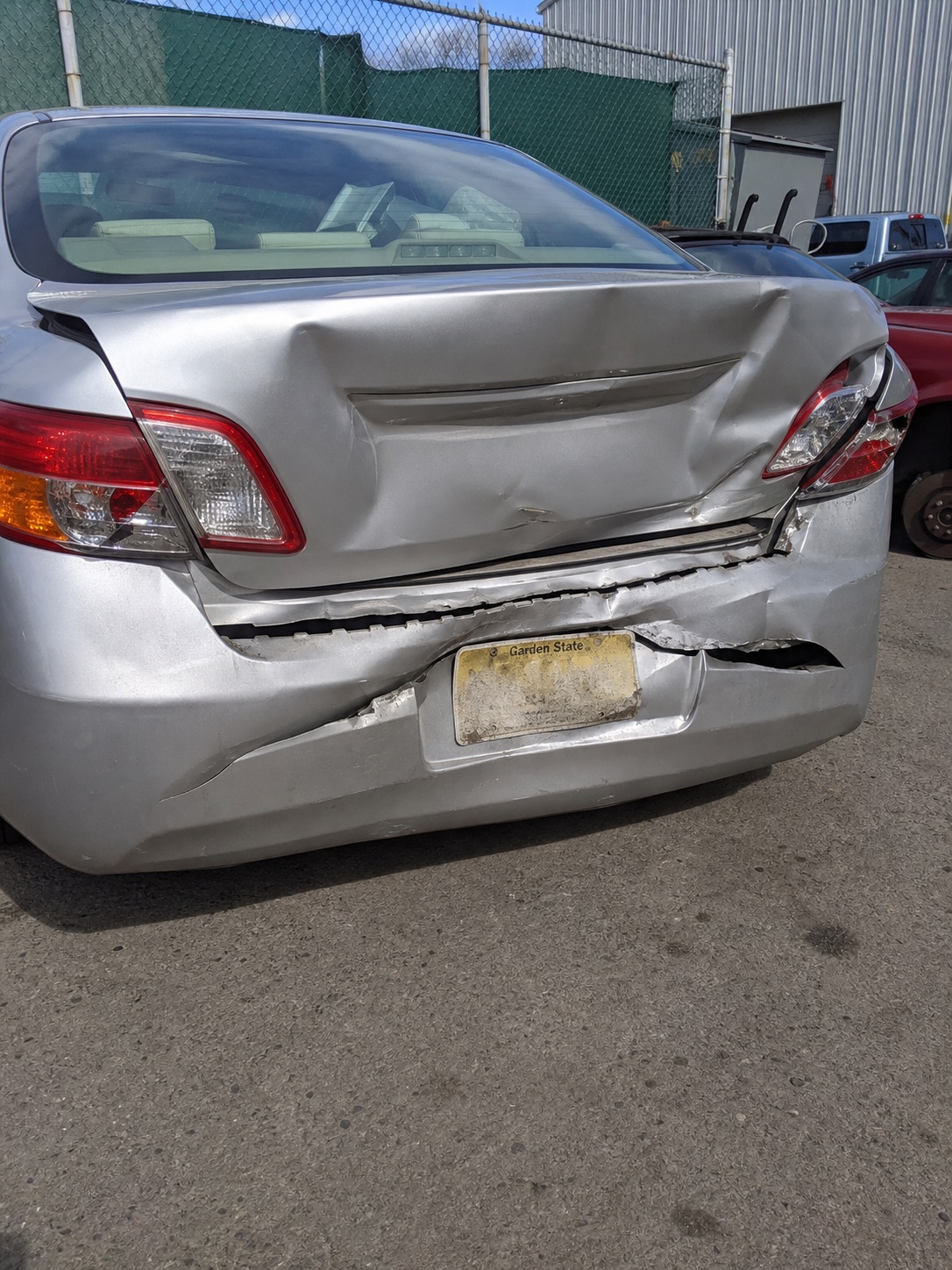
Keep originals before making annotated copies. A diagram with arrows can be useful for showing your question, but it should be labeled as your explanation rather than a verified reconstruction. Our bumper and mirror illustrations do not depict an actual chain collision. Visible damage does not establish the full sequence or diagnose an injury. Do not return to a dangerous road to obtain a missing view; acknowledge that the view is missing.
Keep witness viewpoints separate
A person several vehicles behind you may have seen an earlier contact. Someone ahead may have noticed the aftermath only. Ask where the witness was and preserve the account in their own words when possible. A witness's position helps explain both the details they saw and the parts outside their view.
Avoid proposing your preferred sequence before asking what the person remembers. If an account conflicts with yours, preserve the conflict rather than editing one version into agreement. Different viewpoints can create different observations without making either a complete explanation. Save relevant messages privately and keep a distinction between an original statement and a later summary. The goal is a record that can be examined, not a consensus assembled by the participants.
Make a separate entry for every claim contact
Several vehicles may lead to correspondence from more than one insurer or representative. Put the company, claim identifier and subject beside each conversation. A vehicle damage request, a medical coverage question and a request about the sequence can concern different files. Do not assume a document sent to one contact reached all the others.
NJ DOBI explains that a vehicle damage claim may be made through applicable coverage with your own insurer or against another driver's insurer. That is general background, not a recommendation about a specific chain collision. Ask which claim a representative means and what information is required. Before sharing records, verify the recipient and retain a copy of the submission. A response should be read for the subject it actually addresses.

Use the report to identify discrepancies precisely
When you have a report, compare its location and vehicle references with your account. If an entry seems inconsistent, identify the entry rather than saying the whole report is wrong. Your original notes may also contain an error. Add a dated correction when you recognize one, and preserve the original so the change remains understandable.
A report may describe information gathered from several people. Keep that different from your personal observation. Ask the issuing agency or a qualified professional about appropriate steps where clarification is needed. Do not treat an inconsistency as automatic proof of another person's responsibility. The report, photographs and accounts can each contribute material while still leaving questions. A useful review starts by identifying those questions accurately, rather than eliminating them on paper.
Prepare the questions that the chain creates
Before the next conversation, list the unresolved items: the first observed contact, an unidentified vehicle, a missing report entry or a document requested by two insurers. Take the list with the records you already possess. A focused question allows someone to explain what additional material could matter without requiring you to pronounce a cause.
This organizing method does not determine fault between multiple drivers, coverage under a policy or the value of any claim. Health concerns require appropriate care, and legal questions require advice based on the actual facts. An online inquiry does not establish representation or promise acceptance. Your useful first contribution is a consistent vehicle key and a sequence with clear sources. Keep the gaps visible until reliable information provides a basis to fill them.